


Microboards - Ship building industry
MICROSHIELD®’s Microboard® is a FTP Code 2010 – Part 1 certified construction board for the building of interior fittings and other applications in shipbuilding. The Microboard® is lightweight and offers high mechanical strength including edge stability. The Microboard® can be processed with common commercially available machines and offers further advantages in versatile application possibilities.
Non-flammability and excellent acoustic insulation, as well as indoor and outdoor applicability, are just some of the features that meet our customer's versatile needs.
Microboard®s are easy to work with. Cutting, sawing, nailing, stapling, painting, direct veneering, etc. are just some of the advantages over standard products.
Microboard®s do not contain organic materials, formaldehyde, asbestos or other toxic substances.
They are environmentally neutral and without any influences for humans and the environment.
Construction boards from MICROSHIELD® require about 30% less energy in production than conventional, cement-bonded construction boards. This makes Microboard®s more ecological than other products and contributes to the global reduction of carbon dioxide.
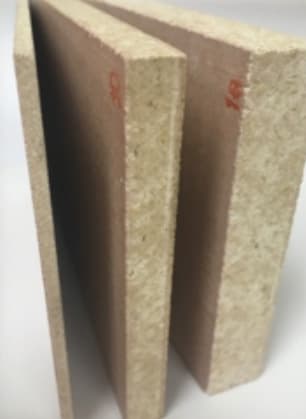
On the left side you see a picture of our Microboards Standard in three different thicknesses.
Talk to us, we are happy to help.
Product Features
Non-combustible
MICROSHIELD®’s Microboard®s are classified as non-combustible-material with FTP Code 2010 Part 1 certification.
Water resistant
Microboard®s are resistant to moisture and do not delaminate or deteriorate.
Weather resistant
Microboard®s withstand high and low temperatures, are not sensible to light and may be used in humid and dry weather conditions.
Sound insulating
Microboard®s provide excellent sound insulation.
Heat insulating
Microboard®s achieve excellent heat insulation for personal and infrastructure safety.
Impact resistant
Microboard®s withstand heavy compression and are therefore the preferred choice for construction boards in the shipbuilding industry
Termite-proof and fungi-resistant
Microboard®s prevent from termite infestation and bacterial fungal growth.
Lightweight and durable
Althought MICROSHIELD®’s Microboard®s are lightweight, they are tough, sturdy and durable.
Non-deforming
Microboard®s are dimensionally stable and do not deform.
Strong and nail-holding
Microboard®s are of high mechanical strength and hold nails and screws firmly. No pre-drilling is necessary.
Fabricating and laminating
Microboard®s can be easily assimilated / fabricated with honeycomb, veneers, laminates or vinyl coverings etc.
Free of harmful substances
Microboard®s are odorless and do not contain asbestos, crystalline silicon oxides, phenol and formaldehyde.
Microboard®s are breathable and support a healthy indoor climate.
Technical Specifications
Testing Item | Data | Basis |
|---|---|---|
Density (Nautic) | 0.65 g/cm3 | |
Percentage of water swelling | ≤0.3% | |
Screw withdrawal force | ≥70N/mm | |
Flammability class | Non-combustible substrate | FTP Code 2010 – Part 1 |
Sound insulation | >40dB | 9 mm Microboard®, +50 mm rockwool isolation |
Bending strength | >16MPa | 10 mm Microboard® |
Impacting strength | >5.5kJ/m2 | 10 mm Microboard® |
Environment | no asbest, no formaldehyde | |
Thermal conductivity | 0.109W/(m*K) | |
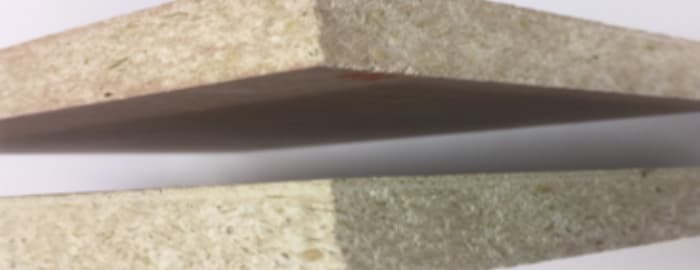
Color | Pink brownish | |
Surface (Nautic) | Smooth both sides |
Microboard® sizes
Thickness | Length × Width |
|---|---|
Standard 3mm to 50mm | 2440 × 1220 mm |
Climatic change cycles
KLW rating | No cracks or delamination after 25 cycles in the test |
Our Commitment to the Environment
Green in materials:
MICROSHIELD®’s Microboard®s are odorless and do not contain asbestos, crystalline silica, or any toxic glues, such as urea/phenol formaldehyde.
Green in production:
MICROSHIELD®’s Microboard®s require 30% less energy to manufacture then comparable products.
Green in installations:
Microboard®s can be conventionally processed and coated.